If we consider removable prosthetics, which is quite an effective solution in difficult cases, then the most popular type here is a complete removable lamellar prosthesis. It is made of nylon or acrylic plastic and is used for complete or partial loss of teeth. Such prostheses can be:
- partially removable with fixing elements on natural teeth.
- conditionally removable fixed with the help of implants or on dental cement. This type of construction cannot be removed by the patient on his own, but only in the dental chair.
• After eating, the denture must be removed from the mouth and washed under running water, the oral cavity should be thoroughly rinsed.
• Patients with dentures are not recommended to eat hard and viscous food, especially to abuse chewing gum.
• Do not subject the structure to mechanical impact, protect it from shocks and falls.
Fixed dentures
Fixed prostheses are used in the absence of several units in the dental row. This type is used if you need to give the teeth a different shape or improve their color.
In the "House of Dentistry" various options for permanent prosthetics are available:
1. Crown tabs and overlays made of ceramics. It is an excellent alternative to sealing. Suitable for correcting the defect of part of the tooth.
2. Veneers. Non-removable linings are used to eliminate various defects of the front group of teeth, in order to provide an aesthetic appearance.
3. Crowns:
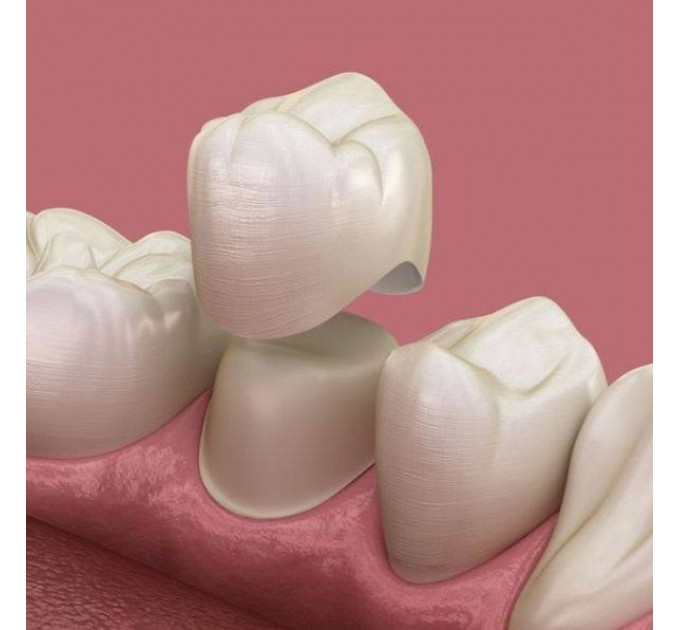
• Metal-free, all-ceramic: suitable for tooth restoration, have the appearance of natural enamel;
• Metal ceramics: strong, reliable crowns capable of withstanding masticatory loads;
• From zirconium: strong, aesthetic, providing high-quality fixation.
At the same time, the crowns look natural, do not cause discomfort, practically do not require getting used to, and are firmly fixed.
How does prosthetics work?
Prostheses are selected and installed according to the specific case of the patient. There are three main stages.
The first stage is an examination. This stage includes initial and detailed examination. The amount of work, the treatment plan and the type of prosthetics are determined.
The second stage is rehabilitation of the oral cavity, that is, complex treatment. Tartar is removed, caries is treated, if necessary, root canal treatment is performed, etc.
The third stage is prosthetics. This stage involves a long and time-consuming process. Molds of the teeth are made, a prosthesis (crown) is made, a fitting is done, if everything is good, the prosthesis (crown) is installed.
So, there are quite a few ways to solve various dental problems. In each specific case, the dentist determines which of the types of prosthetics is most suitable for the patient, taking into account the functional and aesthetic component.