
Types and technologies of bone plastic surgery
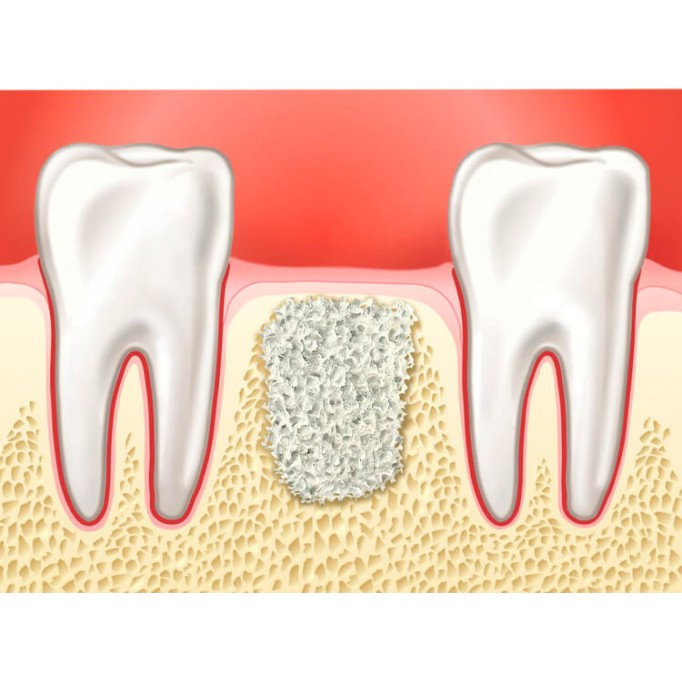
Types and technologies of bone plastic surgery
Bone plastic tooth is performed using several technologies:
• Cleavage of the alveolar process. The method is used to restore from one to several teeth with resorption of the alveolar process. Thanks to this method, implantation is carried out simultaneously with bone plastic, does not require the selection of own bone material.
• Bone grafting. The method is used for severe bone resorption in width and height, suitable for restoration of one or several teeth. The technology does not allow you to start implantation right away. The implant is installed after approximately 6-12 months.
• Directed bone regeneration. The method is applicable for minor bone atrophy, implant installation can be performed simultaneously with tissue transplantation.
• Sinus lifting. The method is based on raising the floor of the maxillary sinus and filling the space with osteoplastic material. The technique can be applied to the upper jaw, where the teeth are close to the maxillary sinus.
Bone grafting in periodontitis is not always effective. This disease is characterized by inflammatory processes and destruction of bone tissue. In the area of the fallen tooth, the bone rapidly atrophies and thins. Therefore, in case of periodontitis, it is important to correctly choose the bone plastic method so that the installed implant in the future achieves good stabilization and can withstand the load.
Reviews about bone plastic during dental implantation note that it is a completely painless procedure, which is performed with the use of anesthesia or medicated sleep. In some cases, bone plastic surgery can be performed simultaneously with the installation of an implant, if only a small increase in the width of the jaw bones is required. With a significant bone deficiency in height, implantation is performed only after 4-6 months.
What material is used for bone plastic surgery? In some cases, bone plastic is performed using the patient's bone element.
However, modern dentistry offers a wide range of osteoplastic materials based on animal tissues - xenoimplants, which show excellent osteoinductive qualities, are completely biocompatible with autogenous bone and completely preserve the structure of the bone matrix.


