
Bone augmentation before implantation
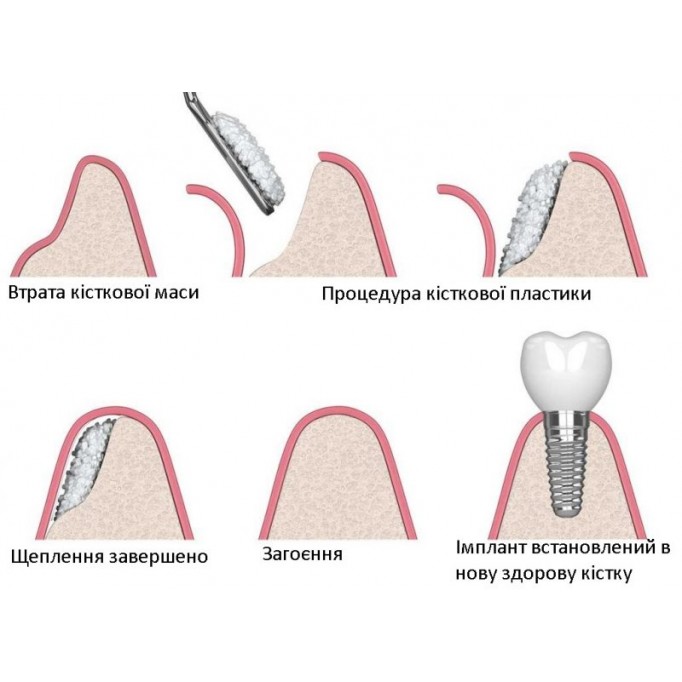
Bone augmentation before implantation
Description:
Bone augmentation is an important procedure performed before dental implant placement if the patient does not have enough bone in the jaw. This process provides a solid foundation for the implant, as without sufficient bone volume, the stability and durability of the artificial tooth cannot be achieved.
Causes of bone atrophy:
1. Tooth loss: After a tooth is extracted, the bone gradually begins to atrophy due to lack of load.
2. Gum disease (periodontitis): Periodontitis can cause bone destruction and lead to tooth loss.
3. Jaw injuries: Mechanical injuries can disrupt the integrity of the bone.
Bone augmentation methods:
1. Sinus lift: Used when the patient has insufficient bone in the upper jaw, near the maxillary sinus. During the procedure, the lining of the maxillary sinus is lifted and a special material is injected into the cavity to stimulate new bone growth.
2. Bone grafting: This method involves using bone materials to replace lost tissue. Both artificial and natural materials are used, including the patient’s own bone or donor materials.
3. Ridge splitting method: This is used when the jawbone is too thin to accommodate an implant. During the surgery, the bone ridge is split and bone material is added to expand it.
When is bone augmentation needed?
The procedure is performed when the jawbone does not have enough bone to support the implant. This is important to ensure the long-term stability of the implant and to avoid future complications.
Healing time:
After bone augmentation, it takes 3 to 9 months for complete healing and restoration of the bone structure before implantation.
Keywords:
#Bone Augmentation #DentalImplantation #SinusLifting #BoneTransplantation #Periodontitis #JawBone #BoneAtrophy #DentalSurgery #DentalImplants #Dentistry


Dental implantation is a complex of surgical and orthopedic manipulations aimed at replacing a missing tooth with its analogue - an implant. At the same time, adjacent teeth are no..


