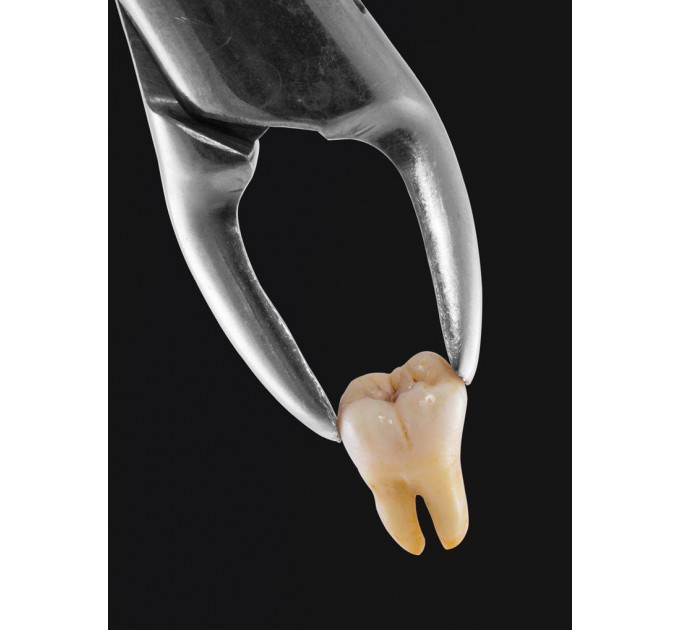
Tooth extraction is an operation that is performed only as a last resort, when it is no longer possible to avoid surgical intervention. Modern dentistry is built on the preservation of teeth, but there are situations when this is the only correct solution.
In what cases should a tooth be removed?
During life, various situations arise in which there are indications for tooth extraction. These can be diseases of the tooth or the maxillofacial system, which are at such a stage when the use of other treatment options does not make sense or is no longer possible.
Indications for tooth extraction
Let's consider the main indications for tooth extraction, which can be conditionally divided into several groups:
Injury:
• longitudinal tooth/root fracture;
• fracture of the crown part without the possibility of further recovery;
• fracture of the jaw - removal of teeth in the area of the fracture
According to the appointment of a dentist or according to therapeutic indications, due to the impossibility of conservative dental treatment, which are caused by:
• significant destruction of the crown part of the tooth without the possibility of using its crown or root for prosthetics;
• obturation of the root canal with a broken endodontic instrument (poor treatment of the tooth canal) if it is impossible to remove it;
• anatomical features (impassability or curvature of root canals);
• as a result of dental treatment that caused perforation of the root or cavity of the tooth, if these violations cannot be eliminated.
Orthodontic indications, including:
• dislocated teeth or teeth that are incorrectly located in the dentition, displace neighboring teeth, injure the mucous membrane and are not subject to orthodontic treatment;
• impacted teeth or unerupted teeth that injure the mucous membrane. They are completely or partially covered by bone or gum tissue, and they can be located in the thickest part of the bone or covered only by a mucous membrane. Wisdom teeth are more often retained. Today, the removal of a retained tooth is one of the most frequent surgical operations in dentistry.
• Supernumerary teeth (hyperdontia) – an increased number of teeth – for orthodontic and cosmetic reasons;
Retinous and dislocated teeth, causing the development of cysts and inflammation in the surrounding tissues, if these phenomena cannot be eliminated in another way;
Periodontal indications, such as significant tooth mobility of 3-4 degrees, protrusion of the tooth from the alveolus with simultaneous exposure of the roots, especially when such a tooth interferes with chewing, injures the surrounding soft tissues or interferes with prosthetics.
Contraindication.
Common contraindications include:
• acute stage of various infections and diseases;
• various chronic diseases of the circulatory system;
• pregnancy during the first and third trimesters;
• diseases of the endocrine system;
• disorders of the nervous system in the acute phase;
• systemic blood diseases;
• prescribed medication that reduces blood coagulation.
If any of the reasons described above are found, the tooth extraction procedure can be carried out according to the doctor's individual opinion. However, in most cases, the extraction is postponed until a more suitable moment for this.
Local contraindications include:
• herpetic lesions of the mucous membrane of the oral cavity, lips and skin;
• stomatitis and other ulcer formations;
• the tooth is located in the zone of formation of a malignant tumor.
Types of tooth removal
According to the execution technique, this dental procedure is divided into simple, complex and atypical removal.
The first option is used for single-rooted teeth, performed with forceps, without additional tools. The second type is suitable for extracting teeth that have two roots or retinous (that have not erupted) and is performed using an auxiliary incision. In the third case, teeth with an atypical location in the jaw are removed.
Depending on the individual characteristics of the teeth, the extraction will vary in complexity and cost. The more complicated the operation, the higher the cost.
Preparation for the procedure
Modern technologies and effective anesthetics have led to the fact that during tooth extraction the patient feels only psychological discomfort. The procedure itself is completely painless. However, it is worth preparing for it:
• you need to eat 1-2 hours before the operation (exception - tooth extraction under general anesthesia);
• one day before visiting the doctor, completely exclude alcohol;
• 40-60 minutes before the procedure, you can take light sedatives
It is recommended to remove the tooth in the morning hours, when the body is energetic and more resistant to stress.
Wisdom tooth removal
Removal of third molars, or so-called "wisdom teeth", deserves special attention. Unfortunately, most people experience problems with these teeth to one degree or another. Why is this happening? Let's try to find out. In connection with a change in the diet - a reduction in the consumption of solid and hard food - the size of the maxillofacial system of most people gradually decreases. Since the eighth teeth, or wisdom teeth, are laid down, formed and erupted last, as a rule, there is no full space for them in the tooth row. Therefore, the following situations may occur:
• dystopia – incorrect position of the wisdom tooth;
• retention or semi-retention - complete absence or partial eruption of a wisdom tooth due to the presence of a mechanical obstacle.
In the future, such conditions can lead to a number of complications, namely:
• purulent inflammation in the pocket ("hood") formed between the gums and the wisdom tooth - pericoronaritis;
• caries of the eighth tooth (wisdom tooth) or an adjacent tooth due to the impossibility of adequate hygiene of this area;
• chronic injury of the mucous membrane of the cheek due to the incorrect (so-called buccal) position of the third molar;
• violation of the position of the frontal group of teeth due to excessive pressure from the retained tooth.
Due to the fact that such teeth have an incorrect position, the specifics of removal, the duration of the operation for their removal and the postoperative period itself may differ from traditional removal.
Removal of wisdom teeth is indicated if they do not grow properly or if the jaw is small and there is not enough space for other teeth. Wisdom teeth do not carry a functional load, that is, they do not participate in the chewing process. Therefore, their removal does not entail serious consequences. It should be noted that wisdom teeth should always be removed. If the tooth has grown correctly and does not affect the position of other teeth, then it can not be removed. Otherwise, deletion is necessary.
Also, removal of wisdom teeth is one of the first stages of orthodontic treatment.
Care and recommendations.
It is important to understand that the tooth extraction process belongs to the class of surgical operations. Even after a simple operation, the healing of the hole will be accompanied by rather unpleasant sensations in the oral cavity. To ensure maximum comfort after tooth extraction, you should follow the following recommendations:
• In case of heavy bleeding: after the operation, the doctor will put a gauze tampon on the hole, but if the bleeding does not stop after twenty minutes, then you need to replace the tampon yourself and apply it for another hour. In the further process of healing, it is also necessary to apply a gauze tampon during bleeding.
• After the painkiller wears off, there is a moment when the pain manifests itself. Ideally, after returning home from the dental office, it is recommended to sleep. If the pain does not allow you to do this, then you need to take an analgesic.
• In severe pain, you can apply cooling compresses.
• It is not recommended to engage in physical activity two to three days after tooth extraction.
• It is necessary to exclude from your diet nuts, hard meat, very hot and very cold foods and other dishes that irritate or burden the oral cavity.
What is not possible.
In addition to recommendations, there are prohibitions. After the tooth is removed, in no case should you:
• you can not rinse your mouth, as this can cause the loss of a blood clot, which, in turn, will significantly increase the healing time of the hole;
• you can't eat excessively hot and excessively cold food;
• for three to five days, you cannot take hot baths, go to the bathhouse, sauna, solarium, etc.;
• exclude physical activity for 3 days
• do not apply ice to the gums and do not warm the area of the hole with compresses;
• it is impossible to stay in the cold and frost for a long time;
• give up smoking for 1-2 days
• it is forbidden to enter the hole with toothpicks and any other objects, because the slightest careless movement can cause trauma to the gums;
• observe oral hygiene;
• patients suffering from diseases of the cardiovascular system should monitor their blood pressure. Proper care of the tooth socket allows to shorten the healing time as much as possible.
If the above rules are not followed, the hole may catch fire, which in the future will cause damage to the entire oral cavity, gums and neighboring teeth. In any case, if any problems arise, you need to visit the dental office as soon as possible.
Alveolitis after tooth extraction.
Alveolitis is a disease manifested by the inflammatory process of the tooth socket. It can arise for various reasons. Most often, this happens as a result of mechanical intervention and damage to the gums. A weak immune system can also cause the development of alveolitis. Signs of the development of this disease are:
• significantly pronounced aching pain;
• absence of a blood clot in the hole;
• the edges of the hole acquired a bright red shade;
• strong pain is felt when touching the gums.
If at least one of the above symptoms appears, it is necessary to seek help as soon as possible. The fact is that in the initial stages of the development of this disease, it can be overcome using a conservative method of treatment. The dentist will select a complex of antibiotics, taking into account the individual characteristics of the patient, and put the medicine in the hole. In addition, antiseptics for rinsing the oral cavity may also be prescribed. If the treatment of alveolitis with medicinal means did not give any effect or the disease is at a late stage, then surgical intervention is used.