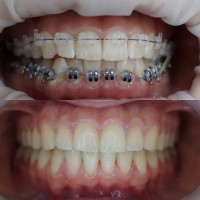
Installing braces is fashionable!
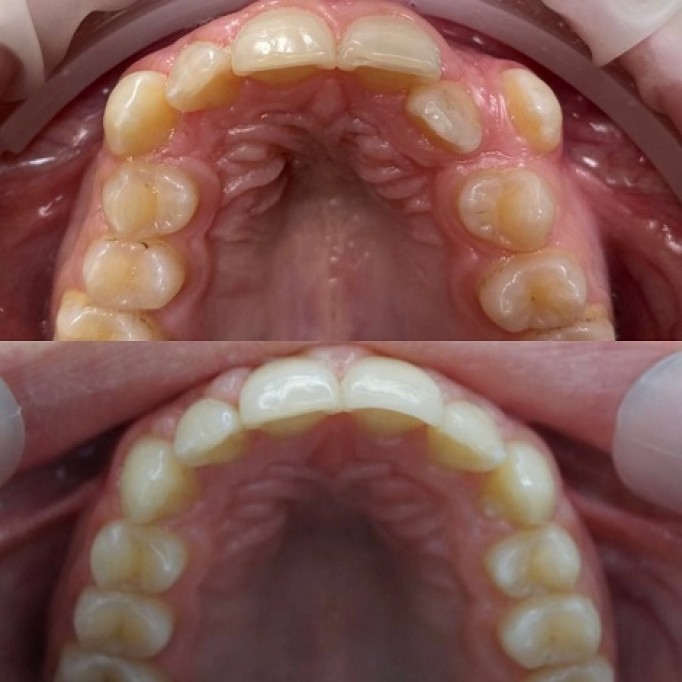
Today, wearing braces is fashionable and not shameful, so there are no problems with their installation for children. Braces for children are necessary to correct congenital or acquired defects of the dentition, which is not only a problem of an aesthetic nature, but also in the absence of treatment can provoke the occurrence of numerous problems - destruction of teeth, problems with digestion, impaired diction.
The main task of parents is to monitor the bite, and in the event of defects to immediately consult a dentist - orthodontist. It is necessary to remember that not only permanent, but also milk teeth should be treated. In our "House of Dentistry" clinic, the selection of the treatment method is carried out only after a thorough diagnosis of the oral cavity. All bracket systems are different:
- convenience;
- aesthetics;
- reliability;
- efficiency.
Braces: what is important to know before installation
Braces are non-removable orthodontic structures of a complex structure, which solve the problem of curvature of the tooth row and pathological bite. Corrective systems are installed for children and adults. If a few decades ago, the only model for eliminating bite defects was rough metal braces, today the treatment differs not only in efficiency, but also in high aesthetics.
Indications for installation
The very word "bracket" is translated from English as "brace". Braces consist of a metal arch, brackets and fasteners. An orthodontic arch passes through a bracket fixed to each tooth. An orthodontic metal arch is a wire made of a special metal alloy that has a "memory" of shape. It is under its pressure that the teeth gradually move, turn, and become in the physiologically correct place. Ligature (optional) — rings made of rubber or metal that fix the arc in the grooves. There is also a ligatureless bracket system.
Bracket systems correct the following problems:
• teething disorders in children aged 9-12 years;
• pathological bite and associated problems;
• congenital anomalies of the development of the maxillofacial row;
• crowding of teeth;
• gaps, large interdental partitions.
A pathological bite requires correction not only for aesthetic purposes. An incorrect bite will later lead to pain in the temporomandibular joint, problems with closing the teeth, distortion of the jaw position. Gross violations lead to distortion of diction, abundant salivation, diseases of the oral cavity and organs of the gastrointestinal tract.